
 EN
EN
 ar
ar bg
bg hr
hr cs
cs da
da nl
nl fi
fi fr
fr de
de el
el hi
hi it
it ko
ko no
no pl
pl pt
pt ro
ro ru
ru es
es sv
sv tl
tl iw
iw id
id lv
lv lt
lt sr
sr sk
sk sl
sl uk
uk vi
vi et
et hu
hu th
th tr
tr fa
fa ms
ms hy
hy ka
ka ur
ur bn
bn mn
mn ta
ta kk
kk uz
uz ku
ku
4G DTU
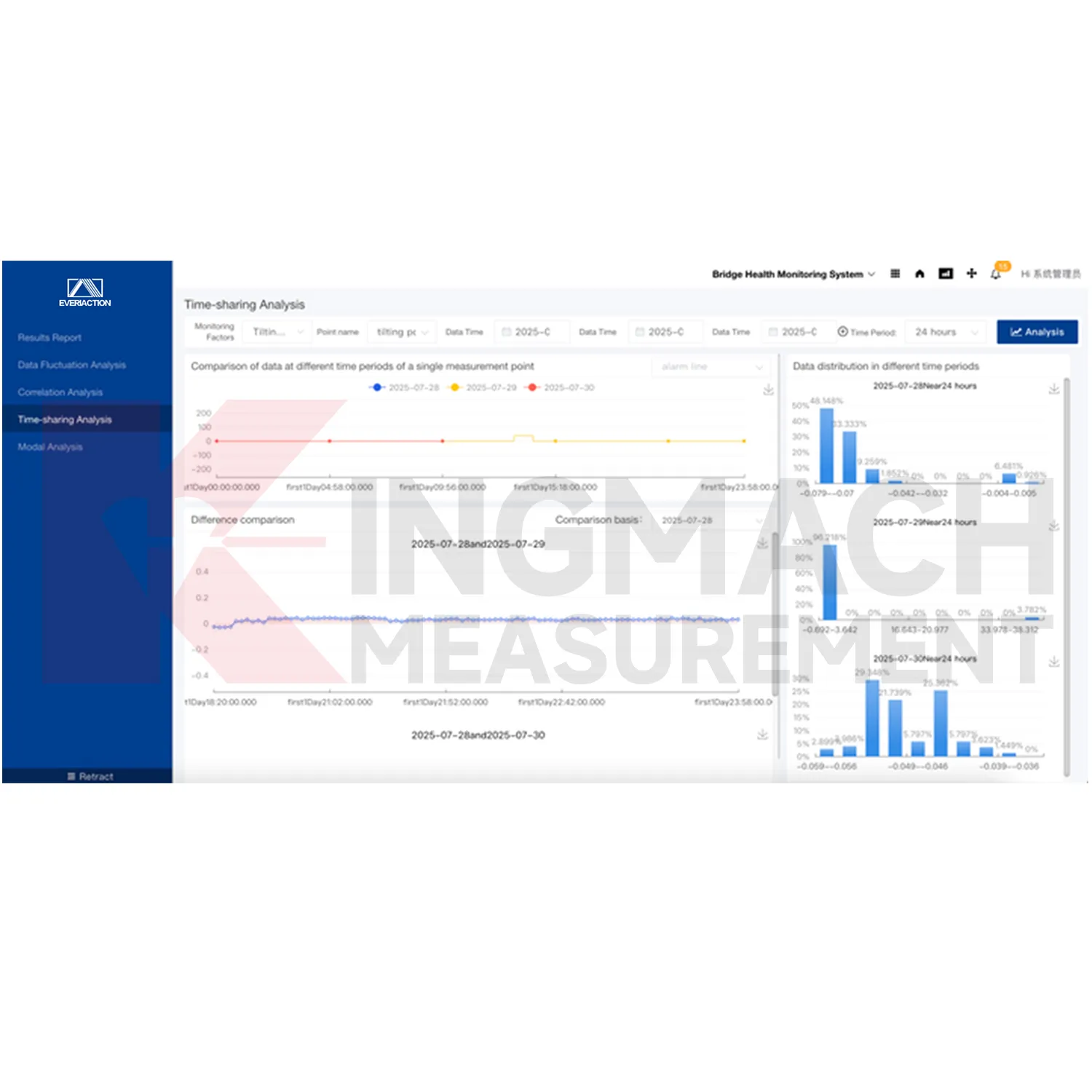
Kingmach 4G DTU refers to the Monitoring system software platform, also described in the local files as the Cloud Platform. It is based on Internet of Things, big data, and cloud computing technologies for all-round monitoring of civil engineering structure safety. The platform receives data from monitoring devices, stores it, filters it, analyzes it, displays it, and supports project management. It is intended for infrastructure and engineering assets where multi-source readings need to be reviewed together instead of scattered across separate devices or spreadsheets.
Application of 4G DTU
Slope monitoring benefits from Kingmach 4G DTU because slope risk often depends on several data types at once. Displacement, rainfall, groundwater, pore pressure, tilt, settlement, and inspection observations all need to be read together. A cloud-based platform can receive wired or wireless device data from field points that are difficult to access. Trend analysis and visual display help users see whether movement follows rainfall, construction disturbance, seasonal water changes, or a developing instability pattern.
The future of 4G DTU
Big data workflows will shape the future of Kingmach 4G DTU. Long-term structural monitoring creates large volumes of readings, alarms, inspection notes, and project documents. Raw storage alone is not enough; the platform must help filter, analyze, compare, visualize, and report those records. Over time, historical baselines will become more useful for judging whether a new event is ordinary, seasonal, construction-related, or abnormal. This makes data history an active part of engineering management.
Care & Maintenance of 4G DTU
When a project is handed over, Kingmach 4G DTU should include a clear operating package. The handover should cover project structure, device list, channel map, alarm rules, user accounts, report templates, backup method, maintenance records, and recent data quality notes. Training should show users how to read trends, respond to alarms, add documents, and export reports. A strong handover prevents the platform from becoming a passive screen and keeps it useful for daily structural safety management.
Kingmach 4G DTU
For project managers, Kingmach 4G DTU gives each monitored asset a defined operating file instead of a loose collection of screens. The team can maintain project basics, live status, inspection notes, maintenance activity, alarm levels, and documents under the same project name. This is useful when an owner needs to explain who checked the data, what changed on site, which alarm was acknowledged, and which report followed. The platform turns daily monitoring into a traceable management routine, so later audits can follow the project history without rebuilding it from scattered folders.
FAQ
Q: How are trend curves used?
A: They help compare current readings with earlier behavior so gradual movement, sudden jumps, or event response can be reviewed.
Q: What does real-time filtering help with?
A: It reduces noisy or distracting records before users study the channel history.
Q: How do alarms guide action?
A: Configured rules point users toward the affected point, severity level, time, and related follow-up record.
Q: What makes reports easier?
A: Stored trends, alarms, project files, and expert review notes can be gathered without rebuilding the evidence manually.
Q: Why is graphical display useful?
A: Graphs help users see movement direction, timing, and abnormal patterns faster than raw tables alone.
Reviews
James Thompson
The tiltmeters and accelerometers are very sensitive and provide precise data. Perfect for our structural health monitoring system.
Matthew Garcia
Instrumentation cables are durable and perform well even in harsh environments. Will definitely order again.
Latest Inquiries
To protect the privacy of our buyers, only public service email domains like Gmail, Yahoo, and MSN will be displayed. Additionally, only a limited portion of the inquiry content will be shown.
Evelyn***@gmail.comSouth Africa
Hi, we are a contractor working on tunnel construction and need settlement sensors and displacement ...
Olivia***@gmail.comUnited States
Hello, we are currently sourcing high-precision strain gauges and load cells for a bridge monitoring...