
 EN
EN
 ar
ar bg
bg hr
hr cs
cs da
da nl
nl fi
fi fr
fr de
de el
el hi
hi it
it ko
ko no
no pl
pl pt
pt ro
ro ru
ru es
es sv
sv tl
tl iw
iw id
id lv
lv lt
lt sr
sr sk
sk sl
sl uk
uk vi
vi et
et hu
hu th
th tr
tr fa
fa ms
ms hy
hy ka
ka ur
ur bn
bn mn
mn ta
ta kk
kk uz
uz ku
ku
5G DTU
Flexible alarm rule configuration is a key feature of Kingmach 5G DTU. The platform can provide matching detailed fault information in real time when a structure fails or when monitoring logic identifies abnormal behavior. Alarm rules can be linked with project alarm levels, channel data, and maintenance needs. This helps users avoid treating every data movement the same way. A minor drift, a rapid jump, and a confirmed multi-channel abnormal pattern can be managed with different levels of attention.
Application of 5G DTU
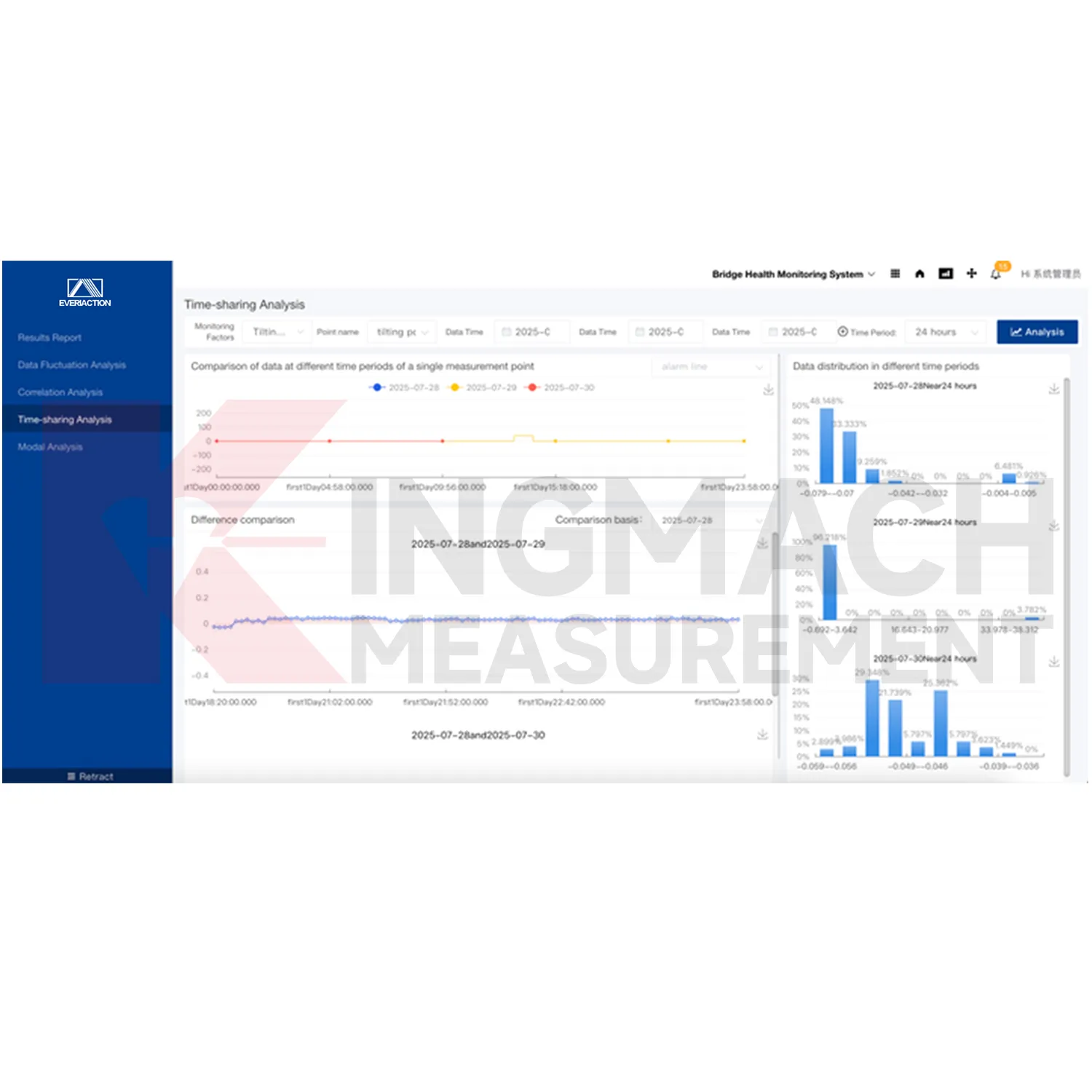
Building monitoring uses Kingmach 5G DTU when settlement, tilt, crack displacement, vibration, temperature, or foundation pit influence must be reviewed over time. Urban projects often involve nearby construction, traffic, equipment vibration, and changing occupancy conditions. The platform helps organize sensor readings and alarms by project, making it easier to compare today's behavior with baseline records. Graphical display is useful for owners and engineers who need to understand whether movement is stable, event-related, or growing.
The future of 5G DTU
Cybersecurity and data governance will become more visible around Kingmach 5G DTU. The local product file notes multiple security protocols and transmission methods. As monitoring data moves through cloud systems and remote access points, users will need clearer rules for account access, data storage, document control, alarm review, and report release. Strong governance helps protect the integrity of structural safety records and keeps responsibility clear across owners, operators, and engineering teams.
Care & Maintenance of 5G DTU
Alarm rules in Kingmach 5G DTU should be reviewed by engineering staff, not copied blindly across every point. Different structures, sensors, and risk levels need different alarm logic. A settlement point, strain point, water-level point, and tilt point may require different thresholds, rate checks, and response procedures. After the first operating period, review alarm history and adjust rules where ordinary behavior is creating unnecessary alerts or where a critical pattern needs faster attention.
Kingmach 5G DTU
Kingmach 5G DTU is built around IoT, big data, and cloud computing technologies for civil engineering safety monitoring. Devices can transmit data to the Cloud Platform through wired or wireless means, allowing mixed field networks to feed a shared review environment. The platform is described as compatible with hardware devices from different manufacturers, different types, and different models. This is useful for owners who already have existing instruments or who need to expand a site in stages. The software layer helps connect new and old monitoring equipment into one readable data environment.
FAQ
Q: How are trend curves used?
A: They help compare current readings with earlier behavior so gradual movement, sudden jumps, or event response can be reviewed.
Q: What does real-time filtering help with?
A: It reduces noisy or distracting records before users study the channel history.
Q: How do alarms guide action?
A: Configured rules point users toward the affected point, severity level, time, and related follow-up record.
Q: What makes reports easier?
A: Stored trends, alarms, project files, and expert review notes can be gathered without rebuilding the evidence manually.
Q: Why is graphical display useful?
A: Graphs help users see movement direction, timing, and abnormal patterns faster than raw tables alone.
Reviews
Christopher Martinez
Very satisfied with the readouts & data loggers. User-friendly interface and supports multiple sensor inputs.
Michael Anderson
The strain gauges and load cells are extremely accurate and stable. They performed very well in our bridge monitoring project. Highly recommended!
Latest Inquiries
To protect the privacy of our buyers, only public service email domains like Gmail, Yahoo, and MSN will be displayed. Additionally, only a limited portion of the inquiry content will be shown.
Sophia***@gmail.comUnited Kingdom
Good day, we need environmental monitoring sensors including temperature, humidity, and wind sensors...
Amelia***@gmail.comSingapore
Hello, I am looking for visualization software for monitoring system data analysis. Please let me kn...