
 EN
EN
 ar
ar bg
bg hr
hr cs
cs da
da nl
nl fi
fi fr
fr de
de el
el hi
hi it
it ko
ko no
no pl
pl pt
pt ro
ro ru
ru es
es sv
sv tl
tl iw
iw id
id lv
lv lt
lt sr
sr sk
sk sl
sl uk
uk vi
vi et
et hu
hu th
th tr
tr fa
fa ms
ms hy
hy ka
ka ur
ur bn
bn mn
mn ta
ta kk
kk uz
uz ku
ku
Twisted Pair Shielded Test Cable
Kingmach Twisted Pair Shielded Test Cable fit naturally with the company's structural health monitoring product range, including strain gauges, load cells, displacement transducers, settlement sensors, tiltmeters, environmental instruments, accelerometers, water-level equipment, and readouts or data loggers. The cable family supports the installation, maintenance, and upgrading of those measurement systems. When a site uses mixed instruments, a consistent cable approach reduces confusion at junction boxes and acquisition cabinets. That consistency becomes important during maintenance, when technicians need to trace a fault quickly without disturbing stable channels.
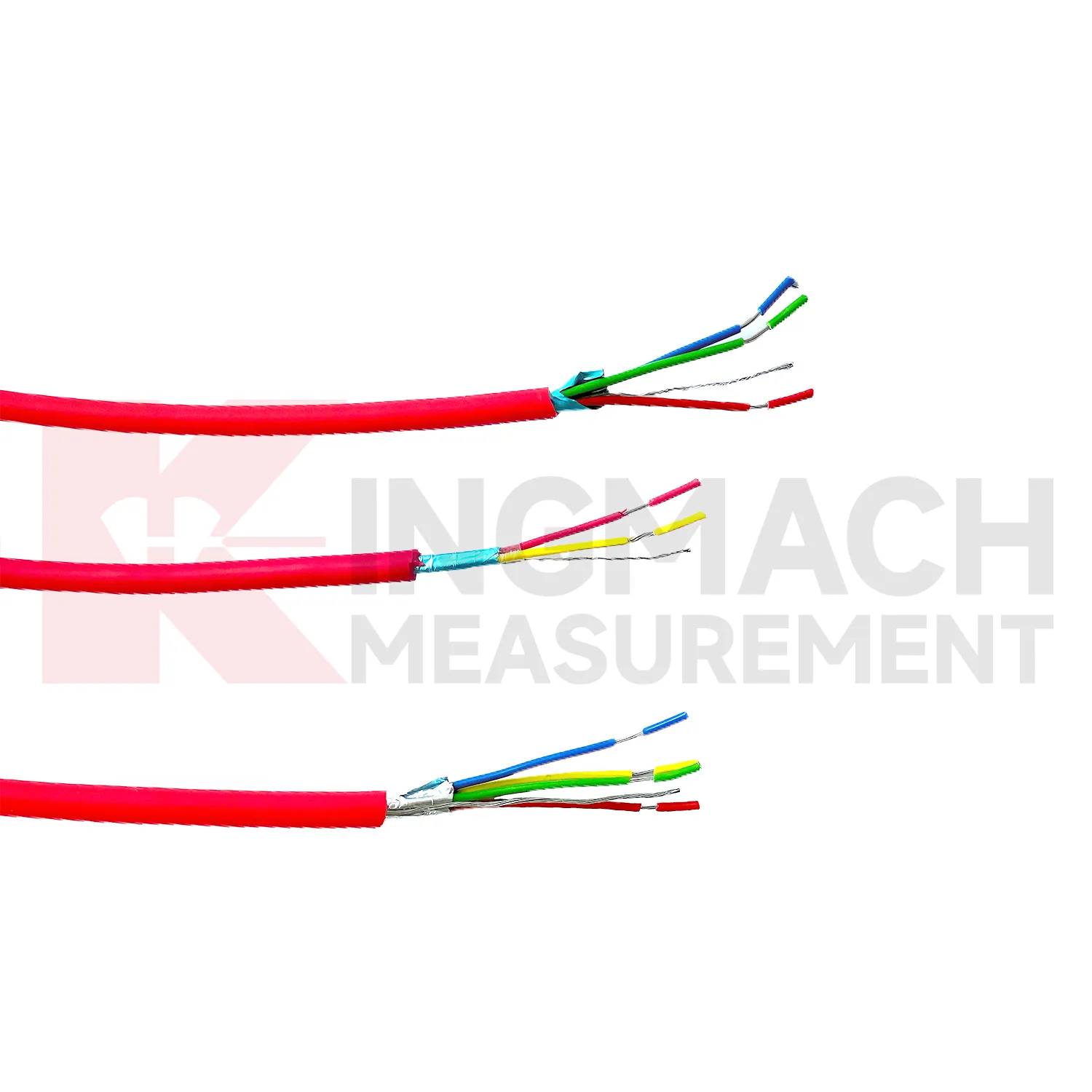
Application of Twisted Pair Shielded Test Cable
Tunnel projects use Kingmach Twisted Pair Shielded Test Cable where sensor routes may run along walls, through cabinets, across wet sections, or near construction equipment. During excavation, lining monitoring, or operation, cable routes can face dust, vibration, dripping water, and accidental pulling. JMZX-XPX supports stable signal transmission for precise sensor readings in noisy areas, while JMZX-XSX helps in damp or water-affected sections. Proper route fixation and end sealing reduce intermittent faults that may otherwise appear as lining movement, deformation, or instrument failure.
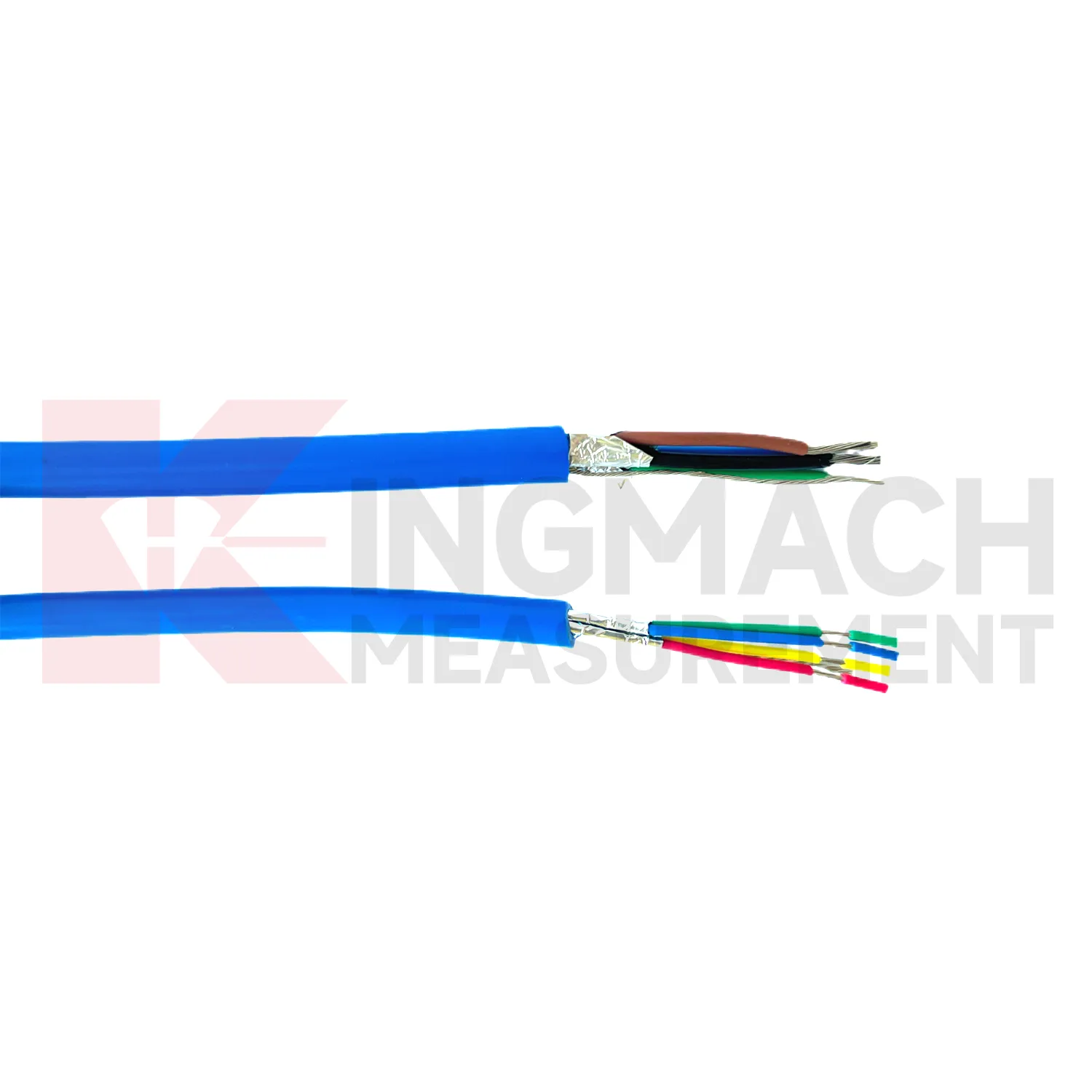
The future of Twisted Pair Shielded Test Cable
AI-assisted monitoring will still depend on Kingmach Twisted Pair Shielded Test Cable because automated review is only as good as the incoming data. If a model learns from noisy, mislabeled, or moisture-affected channels, it may flag ordinary wiring faults as structural anomalies. Future monitoring teams will need cable metadata: model, route, core assignment, shielding status, sealing date, repair history, and first stable test. That context helps automated tools judge whether a data shift belongs to the structure, the environment, or the connection path.
Care & Maintenance of Twisted Pair Shielded Test Cable
When replacing Kingmach Twisted Pair Shielded Test Cable, preserve the traceability of the old and new route. Record cable model, core count, reason for replacement, removed section condition, new termination details, and first stable data after replacement. Do not hide the replacement by forcing the data record to look continuous without notes. Future reviewers need to know whether a change in reading came from the structure, the sensor, the cable, or the maintenance action. Clear replacement records protect both engineering interpretation and owner confidence.
Kingmach Twisted Pair Shielded Test Cable
Kingmach Twisted Pair Shielded Test Cable should be treated as engineered components of the monitoring system. They connect physical instruments to data review, alarms, reports, and maintenance decisions. JMZX-XPX, with layered shielding for test use, supports accurate signal transmission in noisy or precise sensor applications. JMZX-XSX, with added waterproof and tensile properties, supports hydraulic engineering and humid field sections. Both product lines are available in two-core, three-core, four-core, six-core, seven-core, nine-core, and ten-core forms, with common delivery lengths of 2 m or 6 m depending on core count. Used with proper routing and documentation, they help keep structural monitoring data steady over long service periods.
FAQ
Q: What are Kingmach Twisted Pair Shielded Test Cable used for?
A: They connect monitoring sensors, acquisition equipment, cabinets, and data recorders while helping protect signal transmission in demanding field environments.
Q: Which cable models are listed in this category?
A: The local product pages list test dedicated shielded wire JMZX-XPX and hydraulic cable JMZX-XSX.
Q: What is JMZX-XPX designed for?
A: It is a shielded test wire with composite shielding for low-loss sensor signal transmission and resistance to EMI and RFI.
Q: What is JMZX-XSX designed for?
A: It is a hydraulic engineering cable with multi-layer sealing and water-resistant insulation for humid, underwater, or wet routes.
Q: Where are these cables commonly applied?
A: They are used in bridges, tunnels, slopes, buildings, dams, foundation pits, railways, hydraulic works, and mixed monitoring systems.
Reviews
Andrew Lee
The visualization software is intuitive and powerful. It helps us analyze monitoring data efficiently.
Daniel Brown
Excellent environmental monitoring sensors. The data is consistent, and the system integrates smoothly with our existing setup.
Latest Inquiries
To protect the privacy of our buyers, only public service email domains like Gmail, Yahoo, and MSN will be displayed. Additionally, only a limited portion of the inquiry content will be shown.
Emma***@gmail.comCanada
Dear Sir/Madam, we are interested in displacement transducers and settlement sensors for a geotechni...
Charlotte***@gmail.comUnited Arab Emirates
Hi, we require instrumentation cables suitable for harsh environments. Could you advise on specifica...
Related product categories
- Hydraulic cable
- Instrumentation Cables
- Sensor Cables
- Twisted Pair Shielded Test Cable
- Doublelayer Shielded Test Cable
- Triplelayer Shielded Test Cable
- Singlelayer Shielded Test Cable
- Multicore Shielded Test Cable
- 2core / 4core / 6core / 8core Hydrological Cable
- Corrosionresistant Hydrological Cable
- Shielded Hydrological Cable
- Multicore Hydrological Cable