
 EN
EN
 ar
ar bg
bg hr
hr cs
cs da
da nl
nl fi
fi fr
fr de
de el
el hi
hi it
it ko
ko no
no pl
pl pt
pt ro
ro ru
ru es
es sv
sv tl
tl iw
iw id
id lv
lv lt
lt sr
sr sk
sk sl
sl uk
uk vi
vi et
et hu
hu th
th tr
tr fa
fa ms
ms hy
hy ka
ka ur
ur bn
bn mn
mn ta
ta kk
kk uz
uz ku
ku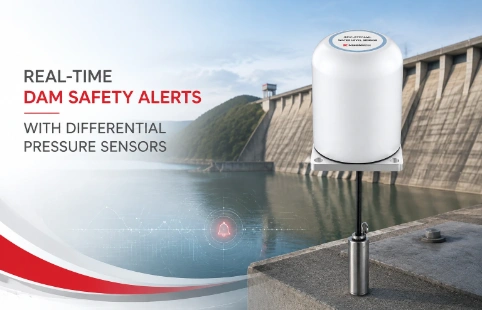
Real-Time Dam Safety Alerts with Differential Pressure Water Level Sensors
Key Takeaways An alert chain needs more than a sensor: define field in...

Hydrostatic Liquid Level Sensors for Precise Monitoring
Whether you\u2019re tracking groundwater levels in a remote borehole or managing tank inventory, the right hydrostatic liquid level sensor can save you weeks of troubleshooting. At Kingmach, we build these sensors to handle field conditions that others shy away from\u2014like slurry, varying barometric pressure, and long cable runs. Our team focuses on practical reliability: sensors that survive temperature swings, resist corrosion, and keep delivering steady signals over years of deployment. That\u2019s a direct result of designing and manufacturing geotechnical instruments for over a decade, where monitoring failures aren\u2019t an option. From standard vented-gauge designs to fully welded titanium variants for aggressive fluids, each unit is built to match the specific demands of your site. And because we understand that no two projects are alike, we offer custom ranges, cable lengths, and output signals\u2014supported by direct access to our engineers for integration questions.
Technical Detail
Hydrostatic level sensors work on a simple principle: the pressure at the bottom of a liquid column is directly proportional to the height of that column. A pressure sensing element\u2014typically a piezoresistive silicon chip or a ceramic capsule\u2014converts the water head into an electrical signal. The trick is making that signal stable and repeatable in real-world environments. Kingmach sensors use all-welded 316L stainless steel bodies with optional Hastelloy or titanium for aggressive fluids. A vented cable equalizes atmospheric pressure changes, eliminating drift caused by weather. Inside, temperature compensation circuits keep the output linear from roughly -10\u00b0C to 60\u00b0C, with overall accuracy within 0.1% to 0.25% of full scale depending on the range. Typical outputs are 4-20 mA (two-wire) or 0-5 V, and we can supply units with Modbus RTU or SDI-12 for direct digital integration. You won\u2019t find off-the-shelf sensors here that fit every scenario. Kingmach offers configurable options: cable materials from PVC to FEP to polyurethane, strain-relief designs for suspended installations, and compact diameters for narrow monitoring wells. For large-scale dam safety projects, we\u2019ve supplied arrays of synchronized level sensors with centralized data collection. For a mining client needing to monitor highly alkaline leachate, we adapted the sensor with a special coating and Hastelloy diaphragm. Our global distribution network means you can get units delivered and supported almost anywhere. And if something goes wrong in the field, our after-sales engineers typically help diagnose the issue within 24 hours\u2014often just by checking wiring diagrams and logger settings. Because in our experience, the sensor itself is rarely the problem; it\u2019s usually the installation.
News
Key Takeaways An alert chain needs more than a sensor: define field in...
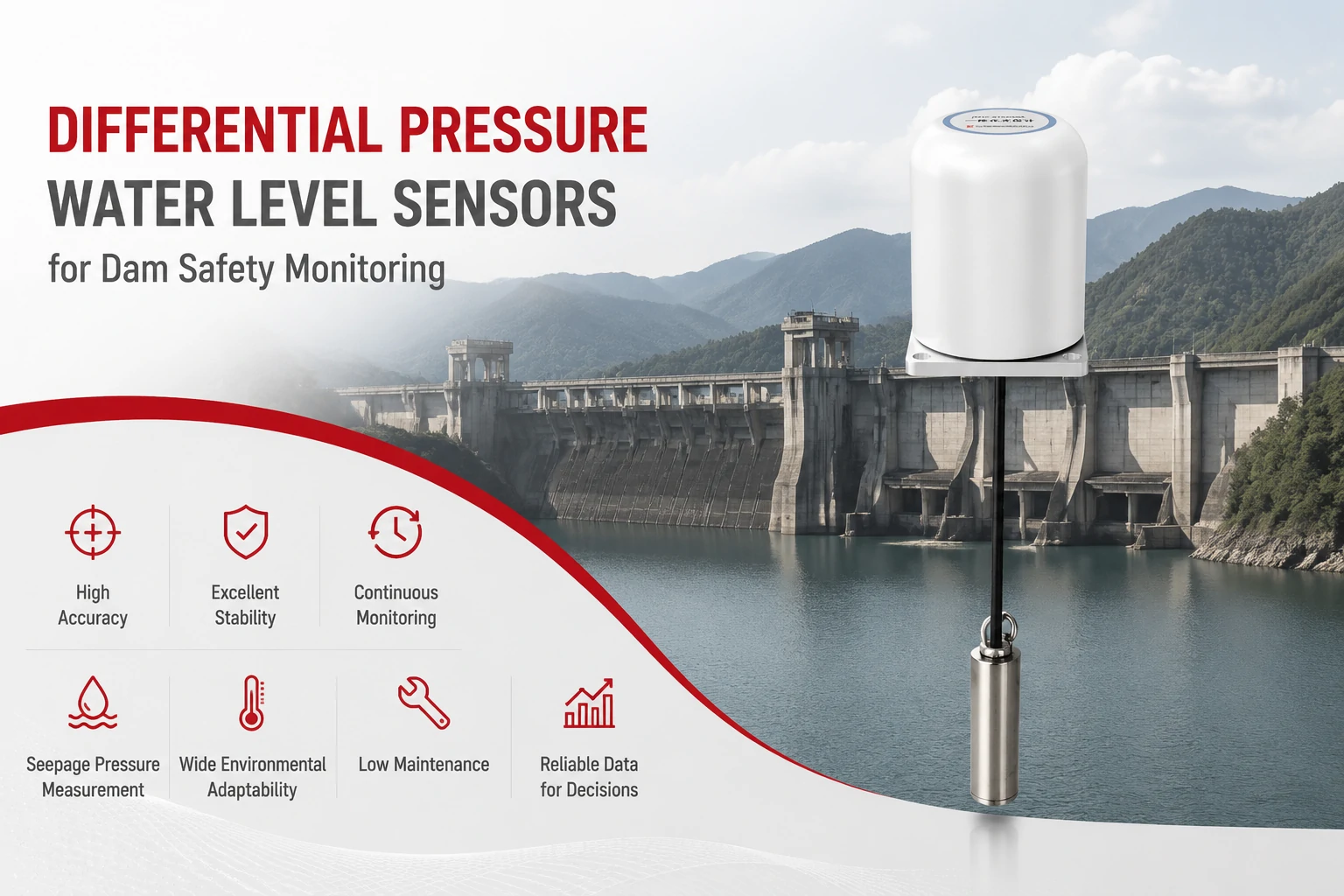
Key Takeaways The strongest fit is usually a confined, submerged, or s...
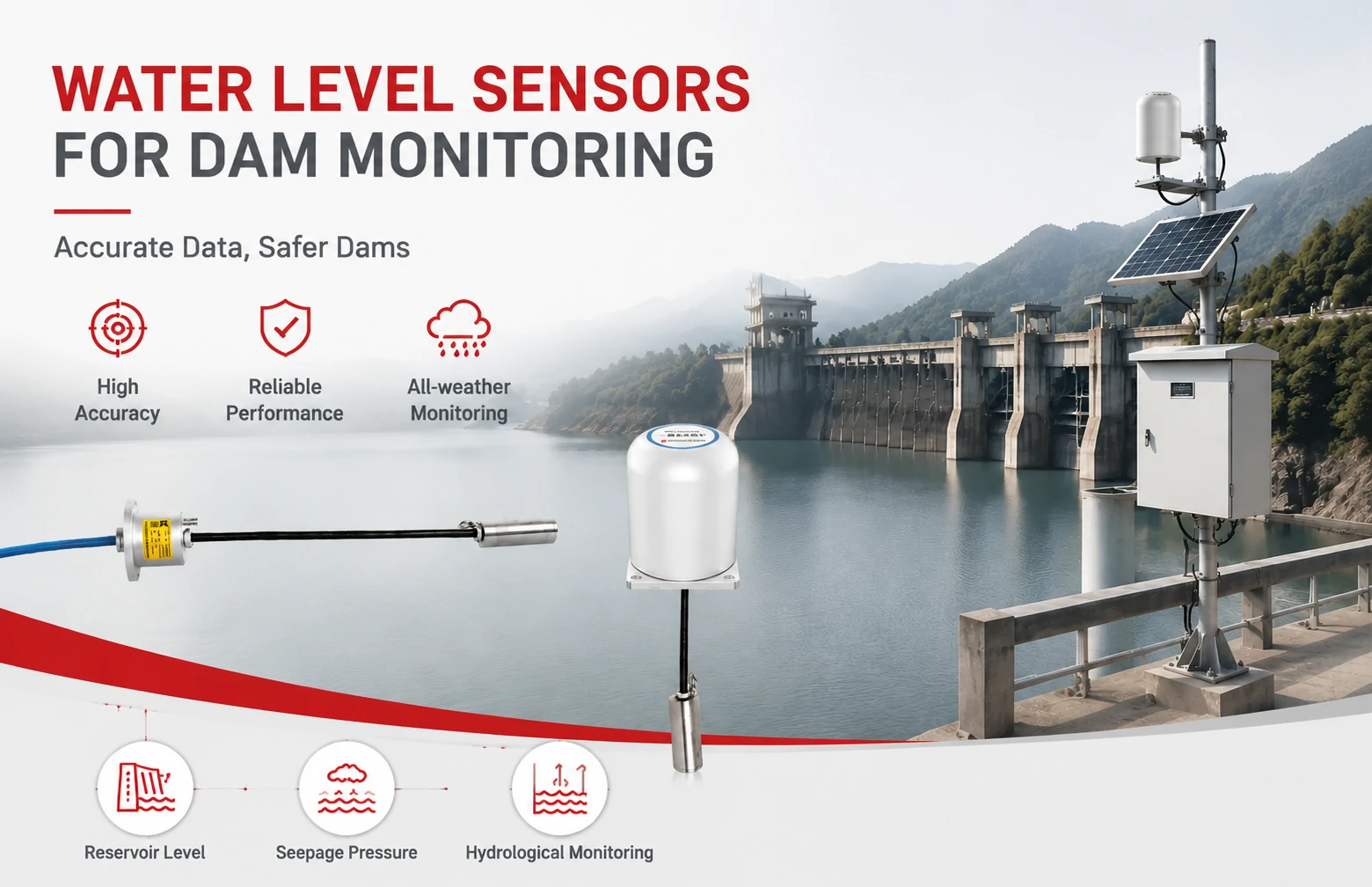
Kingmach Water Level Sensors for Dam Monitoring: A Buyer's Guide to Differential Pre...
Products
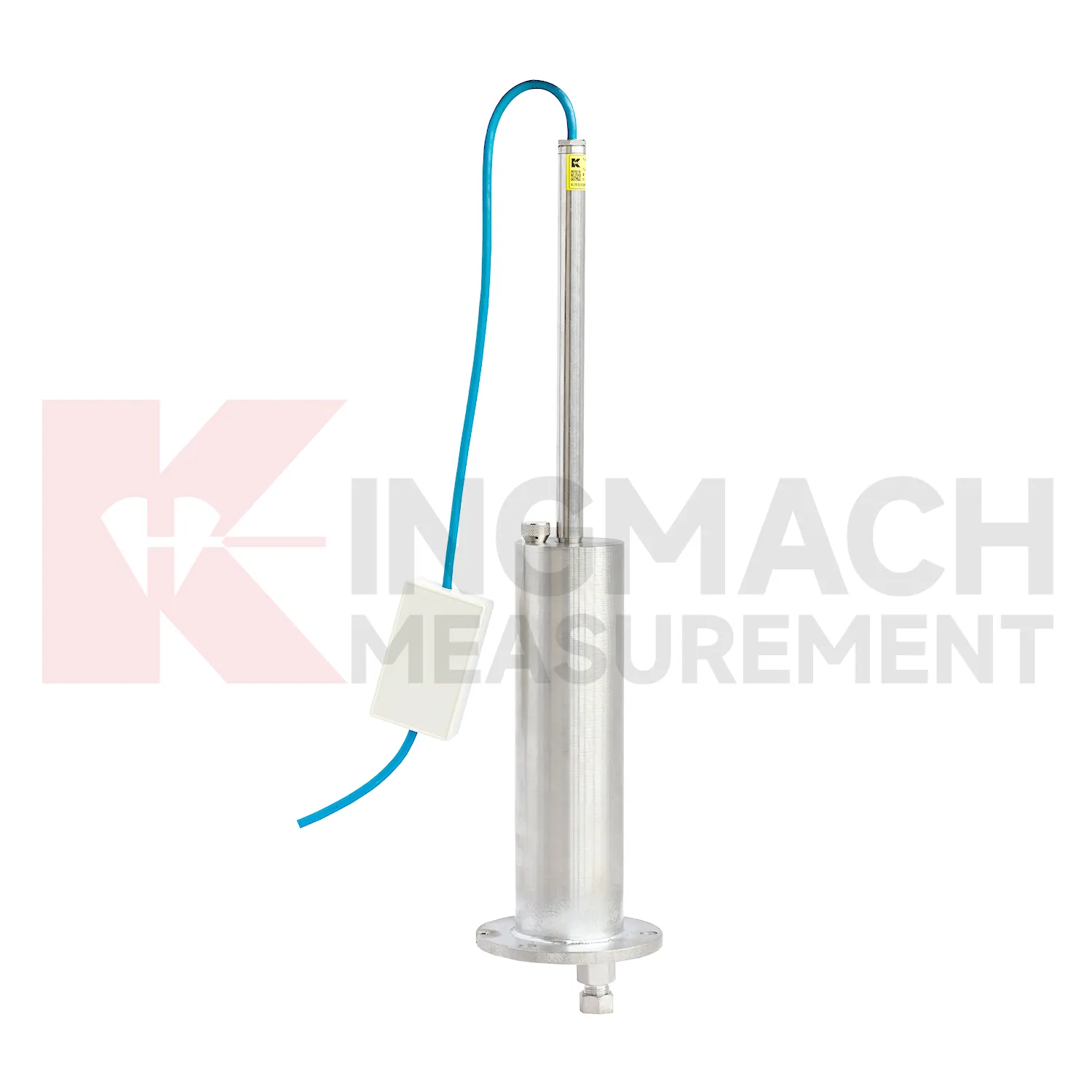
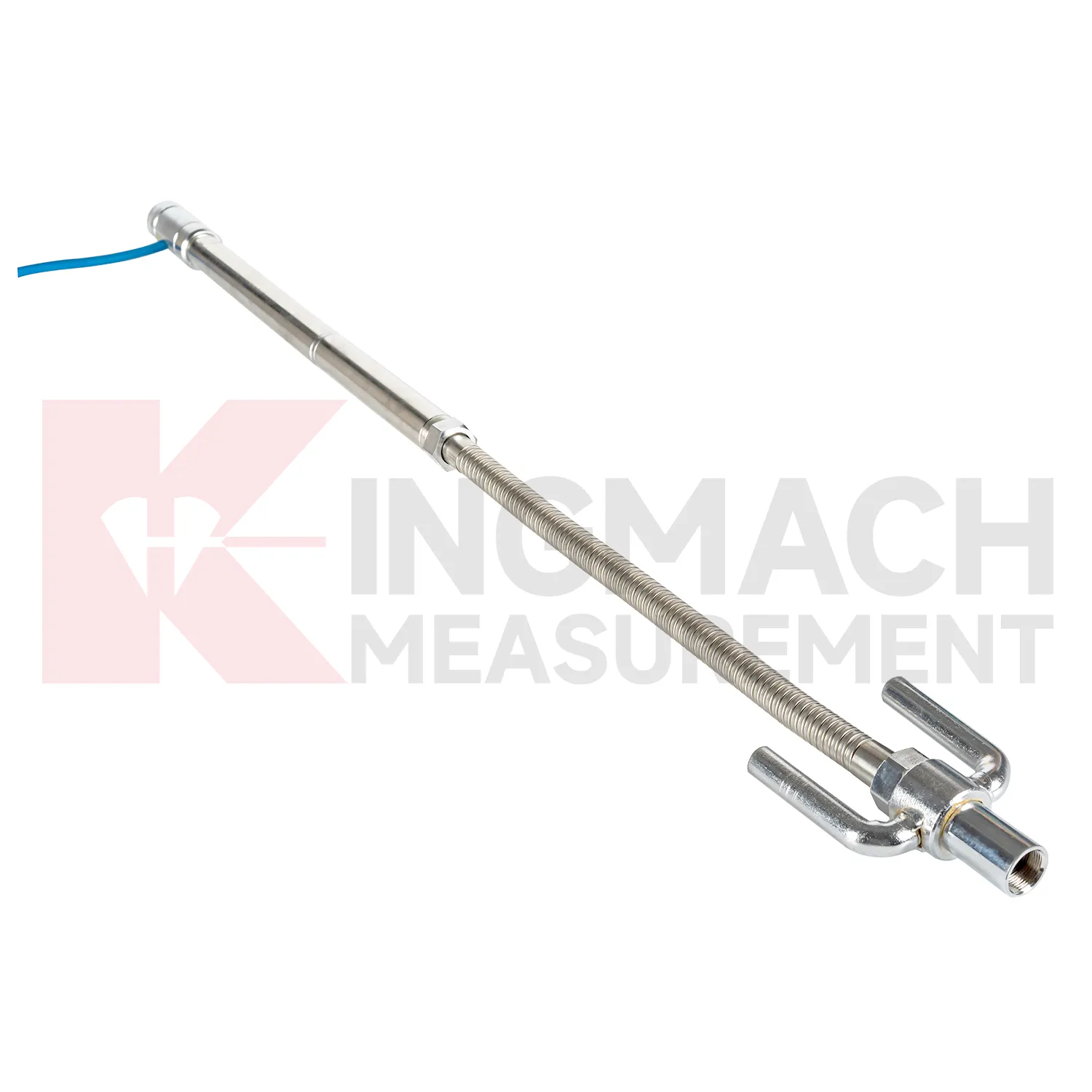
Inductive Frequency-Modulated Hydrostatic Level SensorJMDL-62XXAT、ADT
View Details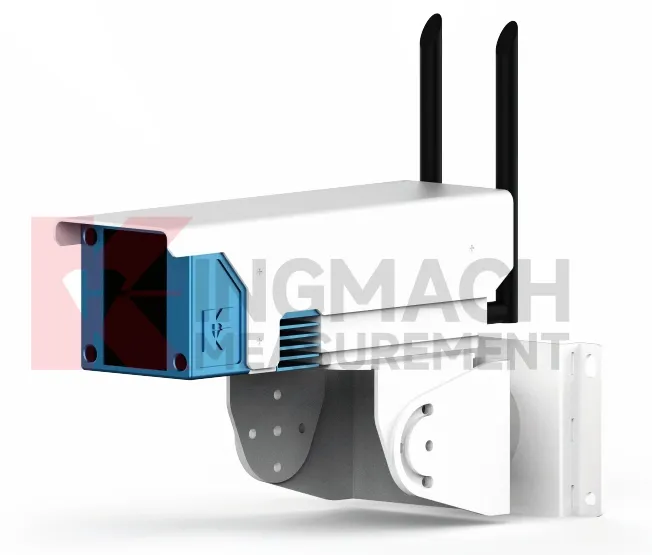
Smart Single-Point Settlement Gauge JMDL-47XXAT
View DetailsFAQ
A gauge sensor measures pressure relative to atmospheric pressure, usually through a vent tube in the cable. An absolute sensor measures relative to a fixed vacuum reference and requires barometric compensation from a separate logger or station. For most surface water and groundwater applications, a vented gauge sensor is simpler and cheaper, provided the vent tube is kept dry. For deep submersible uses where the vent cable is impractical, an absolute sensor plus a barometric logger is the standard approach. Kingmach stocks both types and can help you decide based on your deployment depth and data infrastructure.
Condensation in the vent tube can cause zero drift and erratic readings. We recommend several practices: always route the cable with a drip loop near the datalogger, use desiccant cartridges or hydrophobic vents at the logger end, and seal the sensor-end cable entry properly. Some of our cables come with an embedded gel to block moisture migration. If you\u2019re dealing with extreme humidity, switching to an absolute sensor with separate barometric compensation is often the easier long-term fix.
Yes, but material selection matters. For seawater, we typically recommend titanium housings to prevent crevice corrosion. For acids, Hastelloy or special coatings are available. Our standard 316L stainless steel holds up well in many industrial fluids, but we always ask for a fluid chemistry breakdown before specifying. We also offer ceramic sensing elements if metallic diaphragms aren\u2019t suitable. A quick call with our team early on can avoid expensive mistakes.
Typically, accuracy is specified as a percentage of full scale. For a 20-meter sensor with a 0.1% FS accuracy, that\u2019s \u00b12 cm under lab conditions. In the field, temperature effects and long-term stability are more relevant. Our sensors include active temperature compensation, so the temperature error over -10 to 60\u00b0C is often less than 0.2 mA, which translates to about 2.5 cm for a 20-meter 4-20 mA sensor. Long-term stability is usually better than 0.1% FS per year. We recommend calibrating annually if your data demands it.
We do. Modbus RTU on RS-485 is a common option for longer cable runs and when you want to hook up multiple sensors on a single bus. The digital output gives you temperature, pressure, and calculated level directly, plus diagnostic information like sensor voltage. We can also supply SDI-12 versions. Lead time for digital variants is typically the same as analog\u2014just mention it when you inquire.
Share your product type, target capacity, and application requirements. Our team can review the details and recommend a practical next step.
If you are interested in our products or want to become our partner.
Please leave your contact information, our team will contact you as soon as possible.
Mail: [email protected]
Contact Us: +8613808434127
Address: No. 188 Tongzipo West Rd, Changsha, Hunan, China