
 EN
EN
 ar
ar bg
bg hr
hr cs
cs da
da nl
nl fi
fi fr
fr de
de el
el hi
hi it
it ko
ko no
no pl
pl pt
pt ro
ro ru
ru es
es sv
sv tl
tl iw
iw id
id lv
lv lt
lt sr
sr sk
sk sl
sl uk
uk vi
vi et
et hu
hu th
th tr
tr fa
fa ms
ms hy
hy ka
ka ur
ur bn
bn mn
mn ta
ta kk
kk uz
uz ku
ku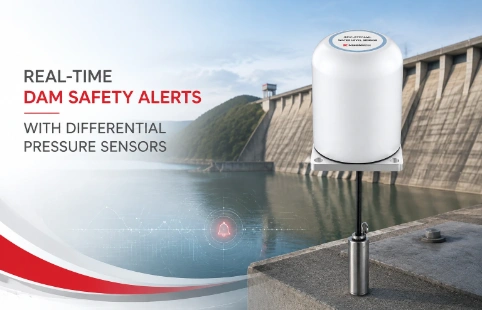
Real-Time Dam Safety Alerts with Differential Pressure Water Level Sensors
Key Takeaways An alert chain needs more than a sensor: define field in...

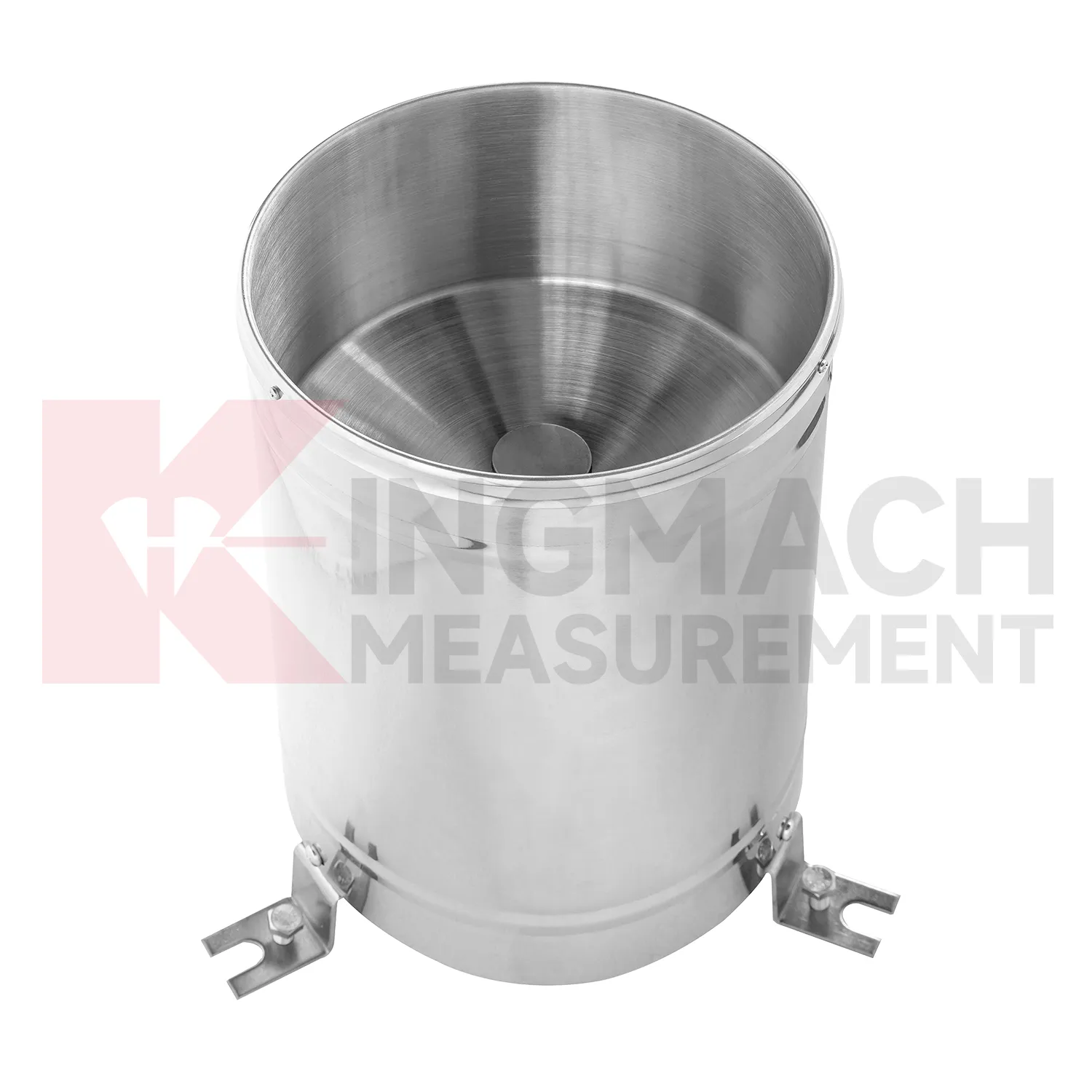
Tipping Bucket Rain Gauge Sensor
A rain gauge that tips. It sounds simple, but out in the field, simplicity often means the difference between data you can trust and a maintenance headache. The tipping bucket rain gauge sensor has been a workhorse for decades because it balances mechanical durability with electrical output—no complex optics, no vulnerable electronics at the collection point. Kingmach has refined this design for geotechnical and environmental monitoring networks where sensors sit on remote hillsides or alongside highways. Their gauges are not lab curiosities; they are built to keep working when leaves, dust, and sudden downpours push lesser instruments past their limits. The result is a precipitation record that hydrologists and civil engineers can feed directly into slope stability alerts, flood forecasting, or simply long-term climate baselines without second-guessing the hardware.
Technical Detail
When specifying a tipping bucket rain gauge sensor, the conversation usually starts with resolution and funnel size. Kingmach’s standard configuration uses a 200 mm diameter collector ring, which captures enough sample area to smooth out gust-induced errors while still fitting into compact automatic weather stations. The tipping mechanism itself is carefully balanced so that each tip represents a known volume of water—typically 0.2 mm or 0.5 mm of rainfall, depending on the model. Swapping calibration buckets takes only a few minutes, so the same base unit can be reconfigured for light drizzle monitoring or heavy storm tracking. The reed switch output delivers a simple pulse signal that almost any data logger can count; some versions include a built-in temperature compensation circuit to keep the tipping moment consistent from winter frost to summer heat. From the geotechnical perspective, rainfall is often the trigger that turns a stable slope into a landslide risk. Kingmach supplies these sensors as part of broader monitoring systems, including vibrating wire piezometers and inclinometers. This means clients are not just buying a stand-alone gauge but a component that fits into a network with shared power, data acquisition, and alert logic. The sensor body is typically cast aluminum or UV-stabilized plastic with a leveling base and bird spikes, all standard. Custom requests—heater elements for snow melt, larger funnels for arid regions, or specific cable lengths—are handled through Kingmach’s engineering team, which is a practical advantage when standard off-the-shelf products do not match the site conditions.
News
Key Takeaways An alert chain needs more than a sensor: define field in...
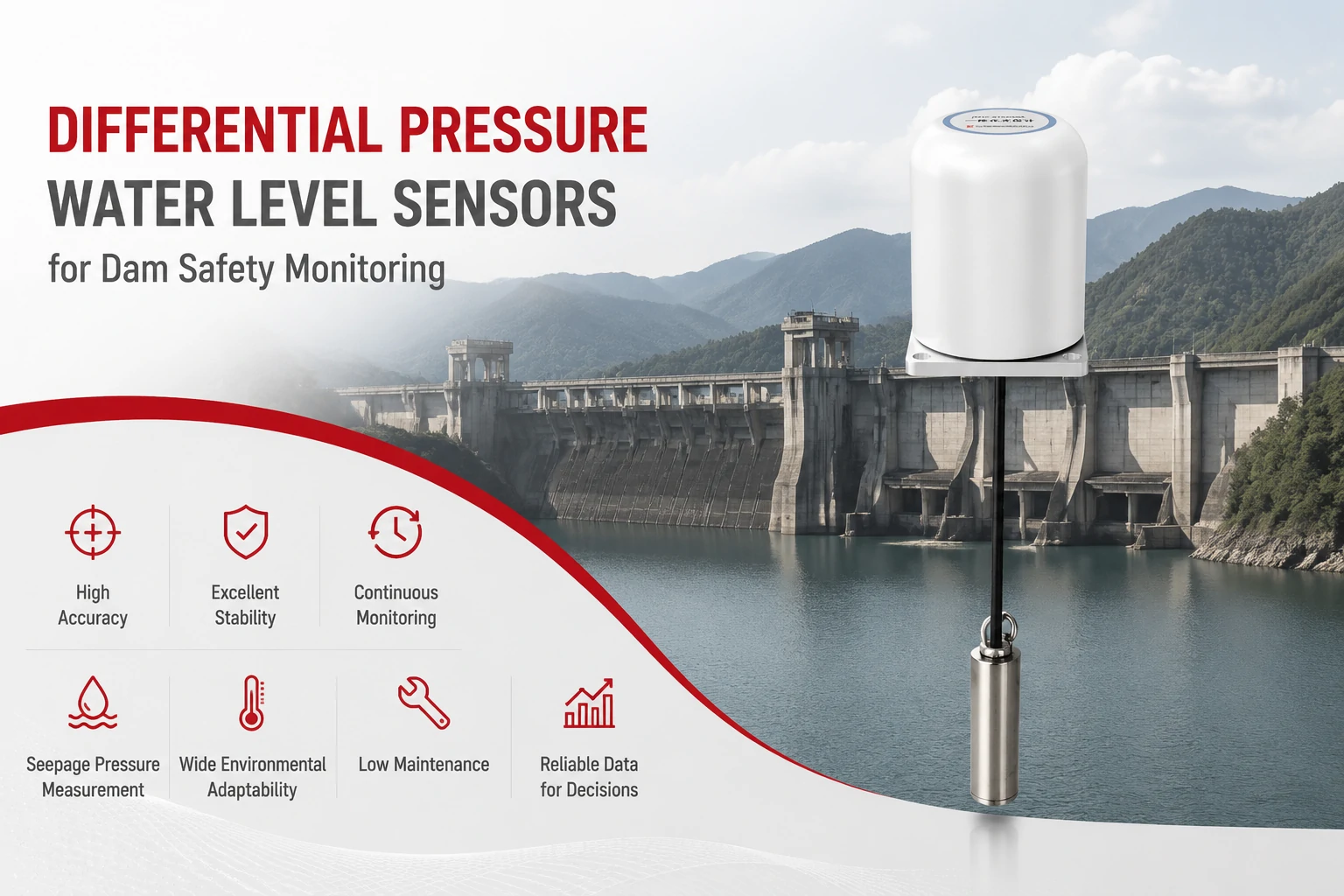
Key Takeaways The strongest fit is usually a confined, submerged, or s...
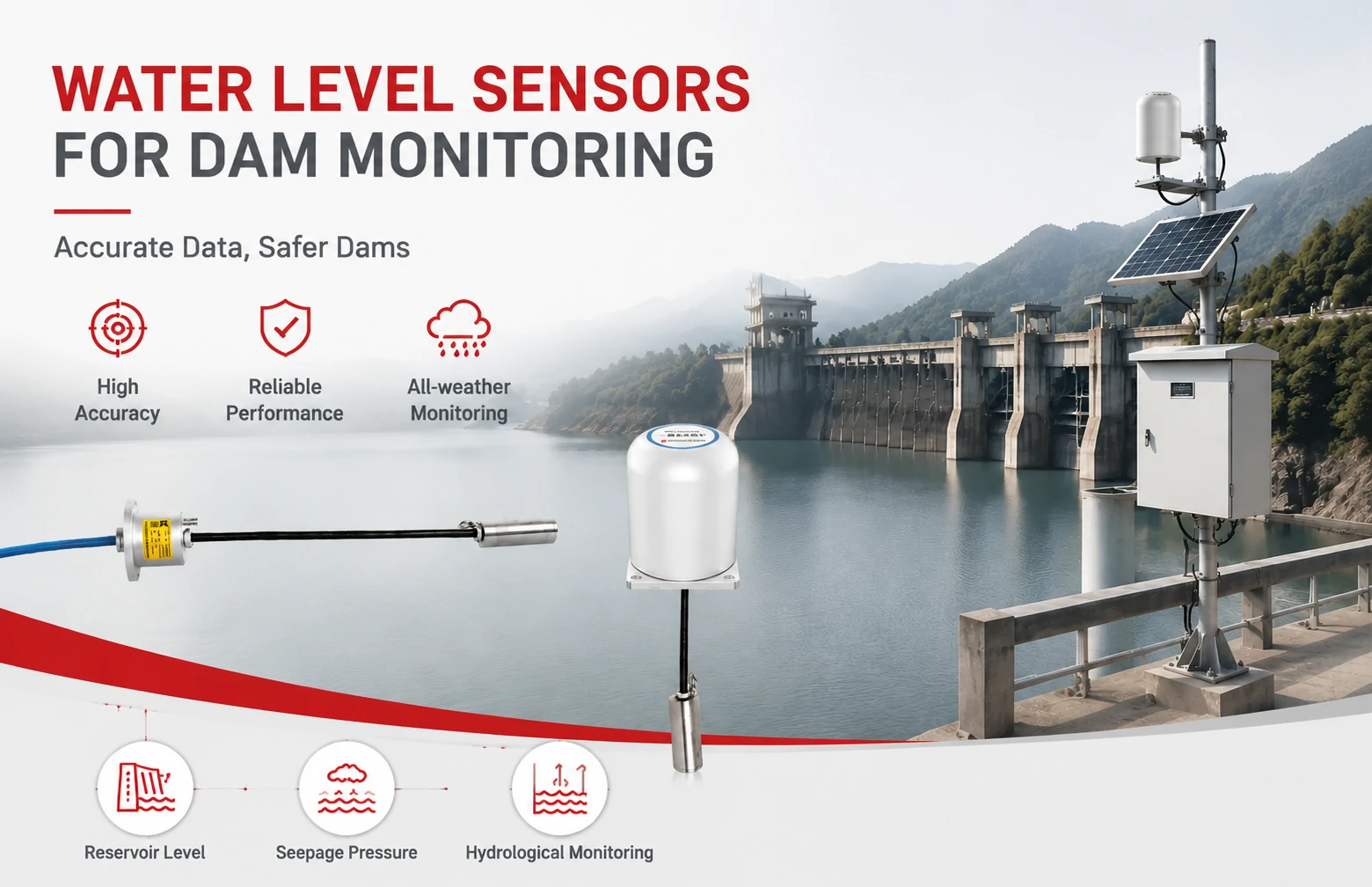
Kingmach Water Level Sensors for Dam Monitoring: A Buyer's Guide to Differential Pre...
Products
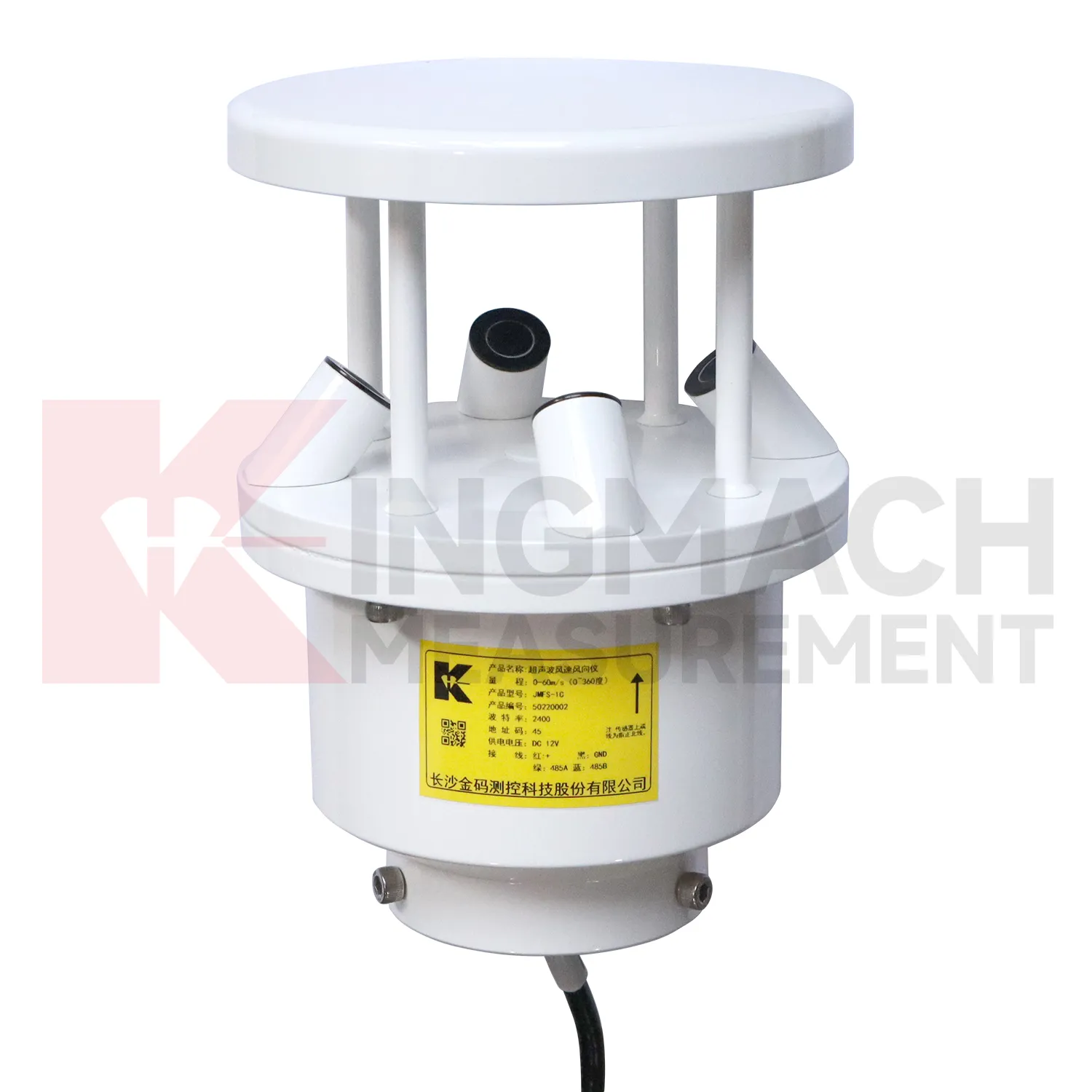
Ultrasonic Wind Speed and Direction Sensor JMFS-1C
View DetailsFAQ
Most of the effort is about keeping the funnel clean. Leaves, bird droppings, and dust will eventually block the inlet or slow the tipping action if left unchecked. A monthly visual check and brushing out debris is usually enough. In colder climates, ice can prevent tipping; heated funnels are available, but they add power draw. The reed switch typically lasts for tens of millions of tips, so electrical failures are rare unless water gets into the cable junction.
Light drizzle is the harder test. If the rain rate is very low, water may evaporate from the bucket before a full tip is accumulated, or the drops may stick to the funnel. Heavy rain can cause undercount if the bucket cannot tip fast enough during the peak intensity. Kingmach’s bucket mechanism is designed to tip quickly, but for extreme events over 500 mm/h, some loss is inevitable. Calibration curves can be applied during data processing if the logger timestamps each tip.
Yes, the reed switch output is a dry contact pulse. It works with most loggers that have a digital counter or even a simple interrupt input. The only requirement is that the logger can detect brief contact closures. Some versions include a debounce circuit to avoid double-counting from switch bounce, but many integrators handle that in software. Cable shield grounding and surge protection are recommended for exposed sites.
With annual cleaning and no physical damage, the pivots and bearing should last over a decade. The bucket assembly can be replaced as a worn module without changing the entire sensor. In coastal or industrial areas, corrosion on the metal pivot pin is the main life limiter; stainless steel pivots are an upgrade option. The real-world failure mode is usually spider webs inside the funnel rather than mechanical wear.
Beyond standard funnel size and resolution choices, Kingmach has supplied units with extended funnel rims for high-wind sites, heated funnels that run on 12V/24V DC, and special output interfaces like 4–20 mA converters for SCADA integration. Cable lengths, mounting brackets, and labeling are tailored to the order. For large deployments, engineering support covers everything from site suitability to data validation protocols.
Share your product type, target capacity, and application requirements. Our team can review the details and recommend a practical next step.
If you are interested in our products or want to become our partner.
Please leave your contact information, our team will contact you as soon as possible.
Mail: [email protected]
Contact Us: +8613808434127
Address: No. 188 Tongzipo West Rd, Changsha, Hunan, China